
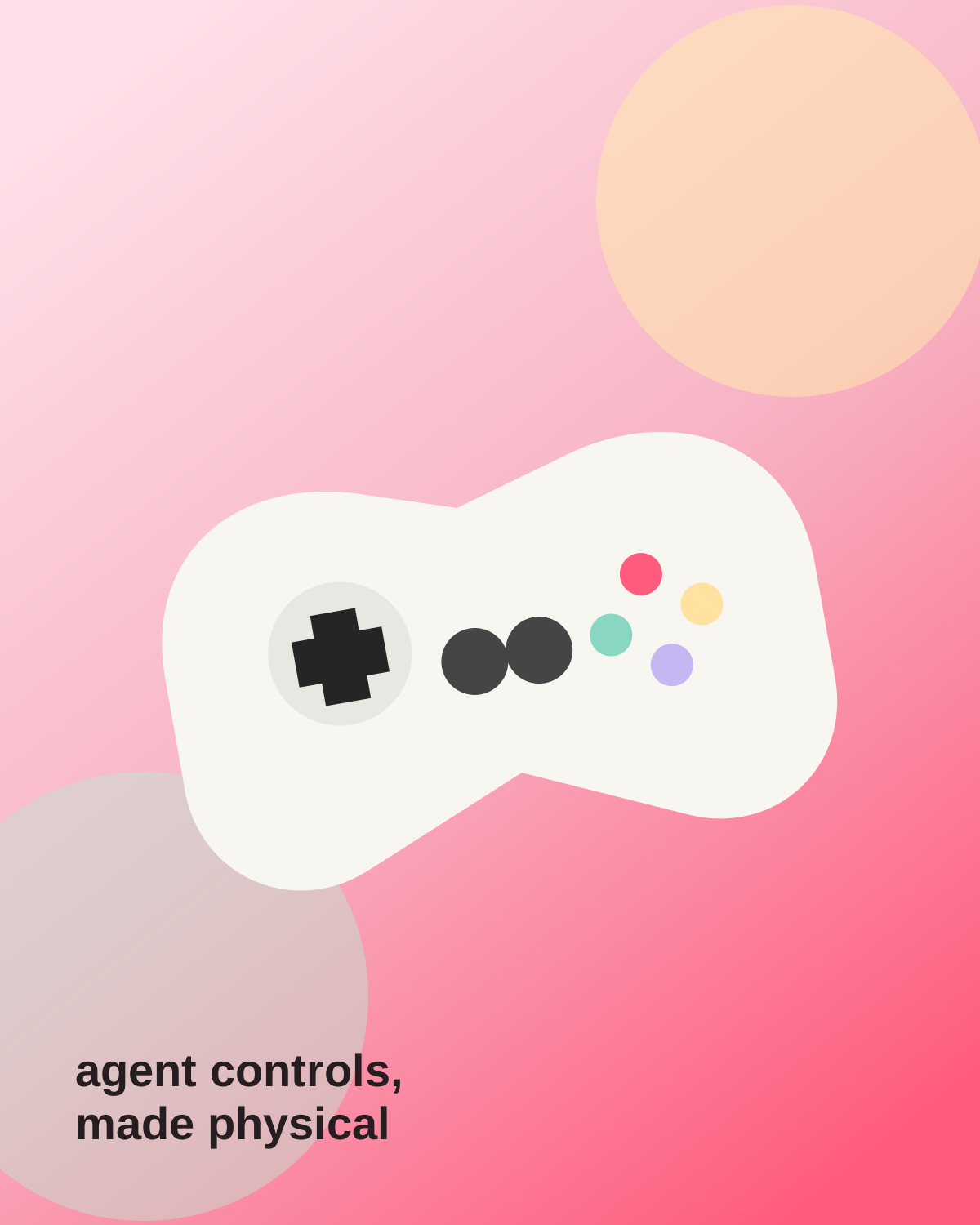
Most agent interfaces assume that more software controls are the answer. This experiment began from the opposite instinct: give the important actions a physical place.
The controller becomes a compact console for starting focused work, changing the active mode, and seeing enough ambient status to know when something needs attention.
Why a controller?
A controller carries a useful interaction vocabulary. It is tactile, glanceable, and already fluent in mode changes. Those qualities are valuable when a system has many possible actions but only a few that should stay close at hand.
What we are testing
- Whether physical controls reduce mode-switching overhead
- How ambient light can communicate agent state without demanding focus
- Which actions deserve to be immediate and which should remain conversational
The point is not to turn work into a game. It is to make orchestration feel more legible when a single person is directing multiple agents.